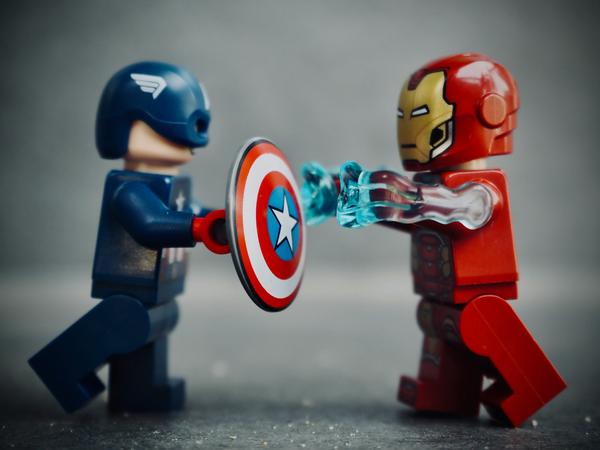
| Why Love Hurts: Attachment and the Pain Cycle Valentine's Day has a way of stirring things up. For some couples, it's connection and closeness. For others, it highlights distance, unmet expectations, or old wounds that feel surprisingly raw. If you've ever wondered why the people we love most can also hurt us the deepest, the answer often lies in attachment — and the pain cycle it activates. In my experience, couples aren't fighting because they don't care — they're reacting because they care deeply and feel the intense pain of distance and disconnection. Attachment Wounds and Why They Hurt So MuchAttachment shapes how we experience closeness. When connection feels secure, relationships feel supportive and grounding. But when attachment wounds are triggered — feeling unwanted, unimportant, unsafe, or alone — the nervous system moves quickly into protection mode (Johnson, 2019). This is where the Pain Cycle shows up in couples. Conflict isn't the enemy. Pain is trying to tell us something. | | | | |
Common Reactive Patterns in CouplesWhile every relationship is unique, most couples fall into predictable patterns when attachment pain is activated: - Pursue / Withdraw
One partner reaches, questions, presses, or pursues connection.
The other pulls away, shuts down, or goes quiet to feel safe
| |
- Criticize / Defend
One partner expresses pain through criticism or frustration.
The other responds with defensiveness or justification.
Neither role is "the problem." These are protective strategies— attempts to restore love or safety that accidentally increase disconnection. You're not fighting about the dishes, the text message, or Valentine's plans. You're fighting about connection. |
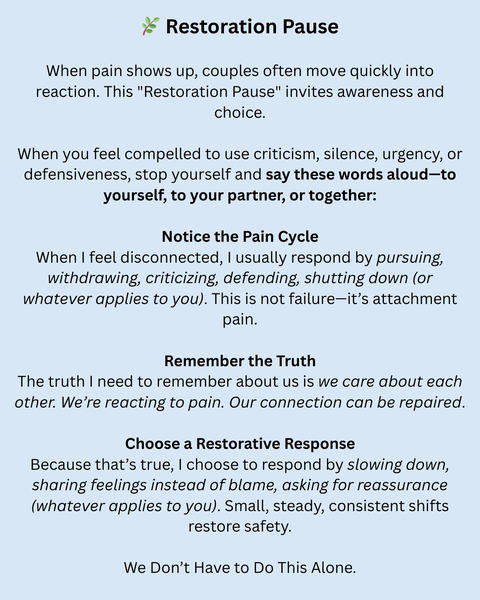
The Four Steps for CouplesIn moments of disconnection, try speaking these steps aloud: - Say What You Feel
"When we feel distant, I notice I feel unloved or unsafe." - Say What You Normally Do
"When I feel this way, I usually pursue harder—or shut down." - Say the Truth
"The truth is, I care about you, and this reaction comes from pain—not lack of love." - Say What You'll Do Differently
"Right now, I'll slow down and share my feelings instead of reacting."
Regulation—staying calm, being thoughtful, speaking kindly—creates connection. A Valentine's Season InvitationIf love feels painful right now, it doesn't mean your relationship is broken. It may mean old attachment wounds are asking for attention. Couples therapy isn't about deciding who's right—it's about helping both partners feel safe, valued, and connected again. |
ReferencesBowlby, J. (1988). A secure base: Parent-child attachment and healthy human development. Basic Books. Johnson, S. M. (2019). Attachment theory in practice: Emotionally focused therapy (EFT) with individuals, couples, and families. Guilford Press. Siegel, D. J. (2012). The developing mind: How relationships and the brain interact to shape who we are (2nd ed.). Guilford Press. |
Before becoming a therapist, Bryan Snead, M.A., NCC, LPC, LMFT was in the technology industry for over 20 years. "One day I realized I was meant to do something else. Something more relational. Something deeply personal. And something that helps others." After 7 years of experience with couples, families, and individuals, Bryan opened DeepWatersLPC to serve as a safe harbor: the practice exists to help people navigate their emotional deep waters - to journey side-by-side with them - toward relief and hope. |
Note: In these stories, I explore the profound connection between therapists and their clients, a bond pivotal in facilitating transformation. Although the individuals depicted in these narratives are fictitious and not derived from specific encounters, they are intended to resonate deeply due to their authentic nature. If you find yourself mirrored within these stories, it is both an unexpected coincidence and a testament to the power of narrative. |
The articles in this newsletter represents the opinions of DeepWatersLPC LLLP. The content presented does not constitute professional therapeutic advice, diagnosis, or treatment. This presentation does not establish a therapist-client relationship; the information being presented is intended for educational and informational purposes only. The inclusion of any specific therapeutic approaches, techniques, or resources in this presentation does not imply endorsement. The content provided is general in nature and may not be applicable to specific individuals or situations. It is essential to consult with a qualified mental health professional for personalized advice based on the unique circumstances. |
|
|