Inviting Families into the Peace Cycle
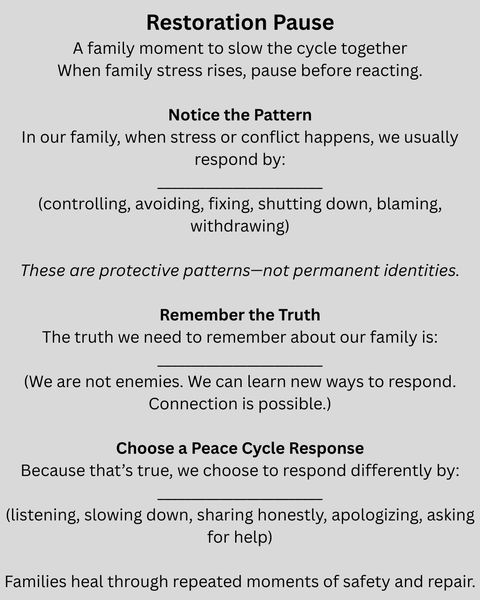
The Peace Cycle begins when families stop organizing around fear and start organizing around connection.
That shift happens through small but meaningful changes:
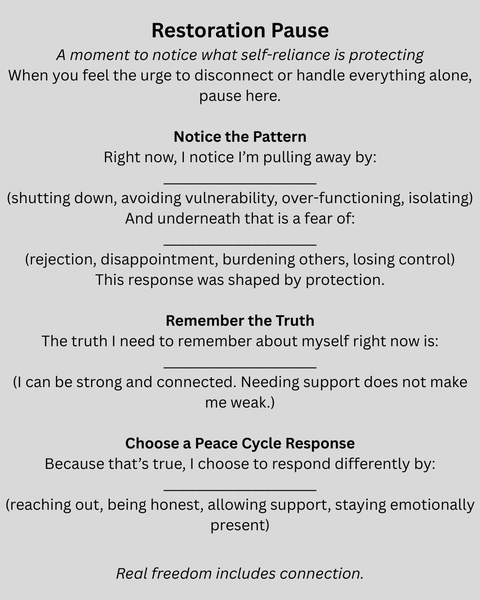
- Naming feelings instead of reacting
- Allowing vulnerability without shame
- Practicing repair after conflict
- Creating emotional safety for honesty
The goal isn’t becoming a “perfect family.”
It’s becoming a family where emotional presence feels safer than emotional preservation.
A Family Example
Imagine a teenager comes home upset and withdrawn.
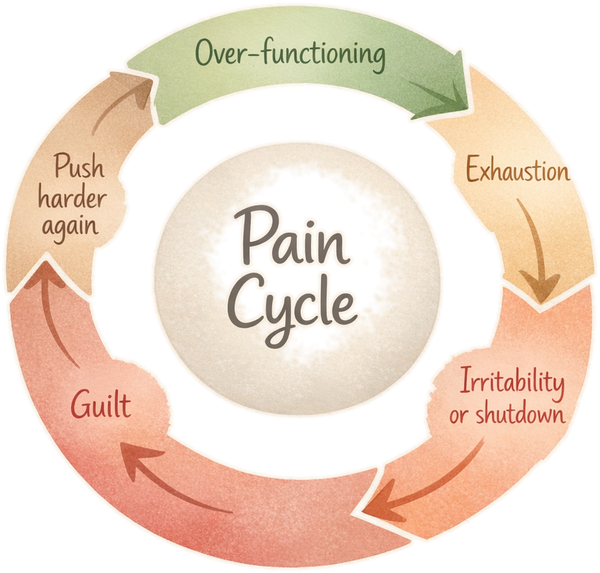
In the Pain Cycle:
- A parent may criticize or lecture
- Another family member may avoid the tension
- The teen may isolate further
Everyone reacts to the discomfort instead of the need underneath it.
In the Peace Cycle:
- Someone slows down
- Curiosity replaces urgency
- The family focuses on connection before correction
That one shift changes the emotional climate of the home.
Breaking Generational Patterns
Many adults are parenting, partnering, and functioning from roles they learned decades ago.
Sometimes the “responsible one” never learned rest.
Sometimes the “quiet one” never learned their voice mattered.
Sometimes the “fixer” never learned they were lovable without over-functioning.
Healing often begins when families recognize:
“This pattern helped us survive—but it’s no longer helping us connect.”
That awareness opens the door to something new.
A Gentle Invitation
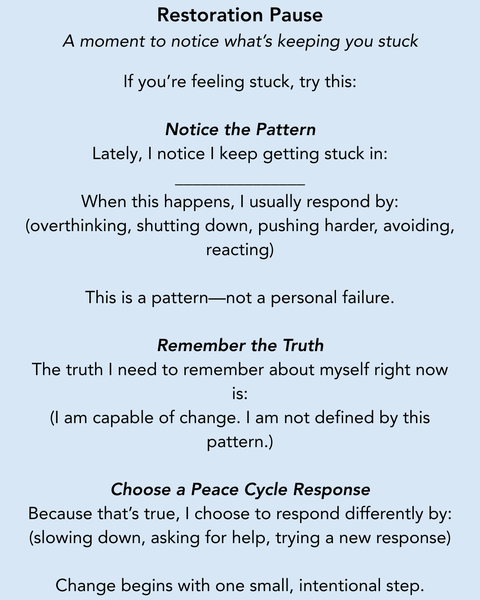
If your family feels stuck in the same painful cycles, therapy can help identify the patterns underneath the conflict and create new ways of relating built on safety, honesty, and repair.
Families don’t heal by avoiding pain.
They heal by learning how to move through it together.