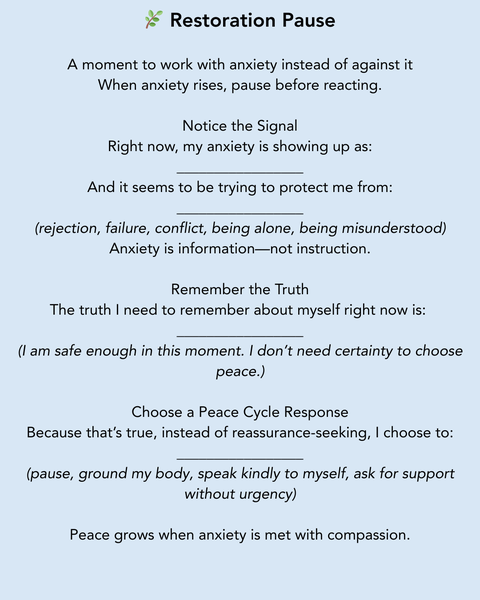
Anxiety gets a bad reputation. We’re taught to manage it, quiet it, eliminate it—anything to make it go away. But anxiety isn’t the enemy. It’s a signal.
From a therapeutic lens, anxiety shows up when something inside us believes protection is needed. The problem isn’t anxiety itself—it’s what happens when we let anxiety take the lead.
What Anxiety Is Trying to Protect
Anxiety’s job is safety. It scans for danger and asks questions like:
- What if something goes wrong?
- What if I’m not okay?
- What if I lose connection?
Often, anxiety is protecting deeper attachment needs—belonging, security, worth, or predictability. When those needs feel threatened, anxiety speaks up. Loudly.
Anxiety isn’t irrational—it’s over-responsible.
How Reassurance-Seeking Fuels the Pain Cycle
One of the most common anxiety responses is reassurance-seeking:
- Asking the same question repeatedly
- Checking texts, moods, or reactions
- Seeking certainty before acting
Reassurance can feel soothing in the moment, but it often strengthens the Pain Cycle. Each time reassurance temporarily lowers anxiety, the brain learns: I need external certainty to feel safe.
Over time, anxiety grows louder, not quieter.
True relief comes from learning how to self-regulate—responding to anxiety with curiosity and truth instead of urgency.