One of the most common—and painful—beliefs around trauma is this:
"If I could just try harder, I wouldn't struggle like this."
But trauma doesn't respond to effort. It responds to safety.
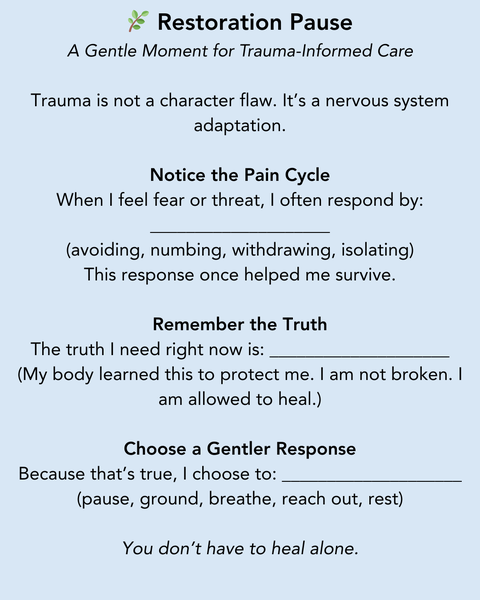
Trauma isn't a lack of discipline, motivation, or strength. It's the nervous system doing exactly what it learned to do to survive.
Trauma Responses Explained
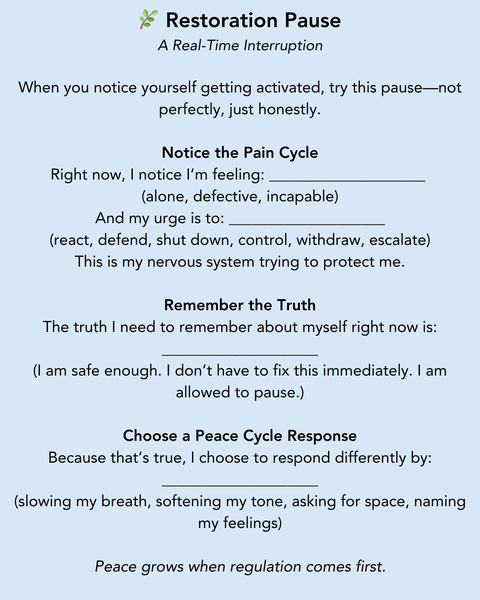
Trauma changes how the brain and body respond to threat. When something feels even subtly unsafe, the nervous system moves into protection mode—often long before logic catches up.
A common trauma-based Pain Cycle looks like this:
Fear → Avoidance → Isolation
Fear activates the threat response. Avoidance shows up as numbing, distraction, withdrawal, or shutting down. Over time, avoidance leads to isolation—emotionally, relationally, and sometimes physically.
These responses aren't weaknesses. They are learned survival strategies.